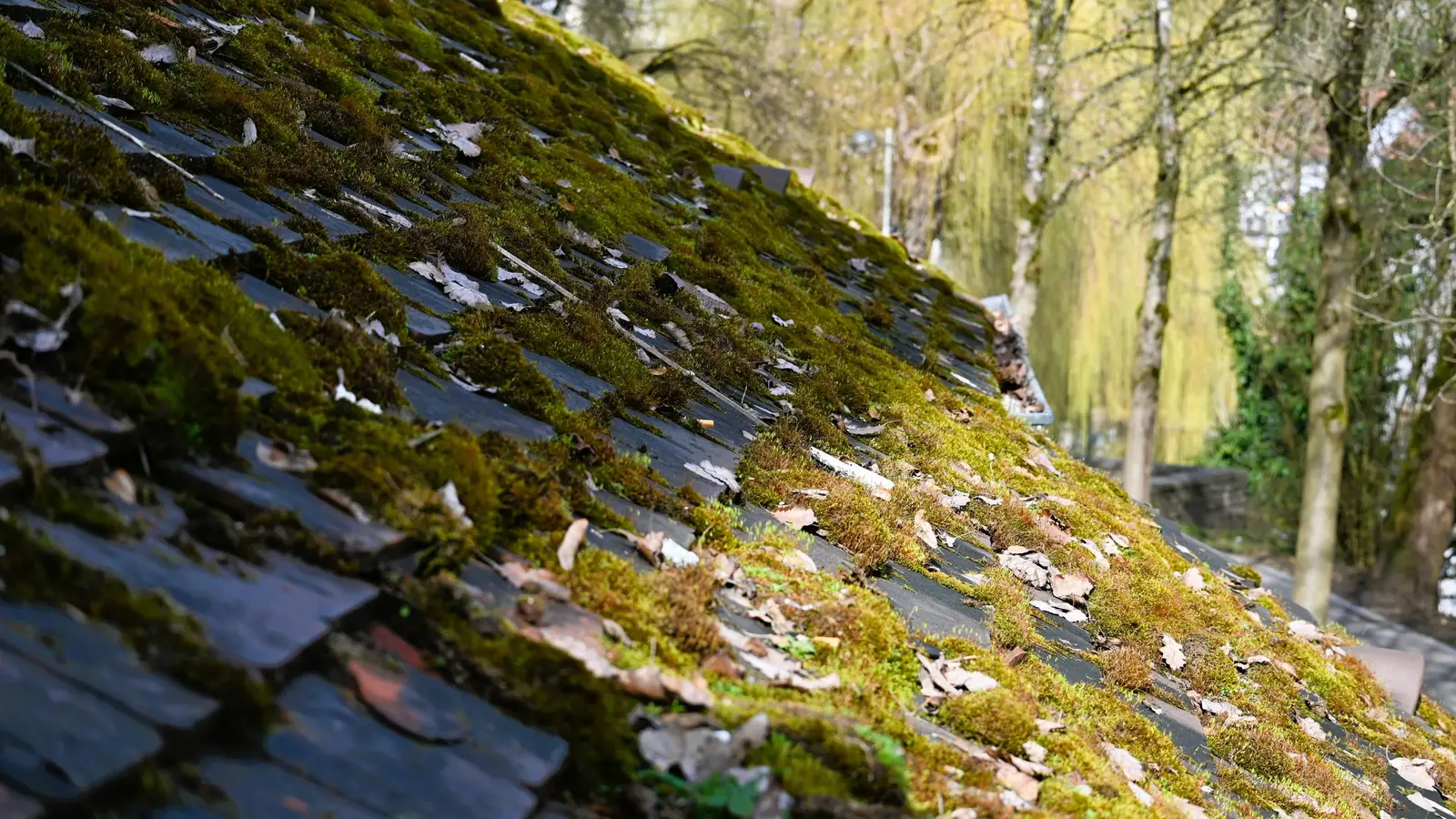
Let's be fair to moss first. A light film of it on a sound roof will not bring the roof down, and many roofers will tell you that moss on its own is rarely the problem. The damage starts when growth is left for years: when it thickens, spreads into gutters and valleys, and starts holding water where water should never sit. That is when a roof that only needed a few hundred pounds of cleaning can end up needing thousands of pounds of repairs.
1. Moss holds water against your tiles
Moss acts like a sponge. After rain it stays wet for days, keeping the tiles beneath it damp long after the rest of the roof has dried. Concrete and clay tiles are slightly porous, so they soak some of that water up.
In winter that trapped water freezes and expands. Repeat the freeze and thaw cycle enough times and the surface of the tile starts to flake and crack, a process known as spalling. Damaged tiles let more water in, which speeds the process up.
2. Thick moss lifts tiles and lets rain in
Moss tends to grow along the bottom edge of each tile, where it overlaps the one below. As the cushions build up they can lift the tails of the tiles and bridge the gap between them. Water then travels along the moss and is drawn up under the tile above, instead of running down the face of the roof as it is designed to. Wind driven rain finds its way in more easily too.
Wet moss is also surprisingly heavy, adding weight to the roof covering exactly where it is weakest.
3. Blocked gutters and valleys
Every heavy shower washes clumps of moss and lichen down the roof and into the gutters. Add autumn leaves from Barnet's many street and garden trees and the gutters, outlets and downpipes soon block. When they do:
- rainwater overflows and runs down the face of the walls, causing damp patches inside, stained render and spalling brickwork
- water soaks the fascia and soffit boards, which rot and need replacing
- water dumped at the foot of the walls can saturate the ground around the foundations and splash up past the damp proof course
- blocked valleys, where two roof slopes meet, can back up in a downpour and spill water straight into the roof space
4. Leaks, wet insulation and rotten timber
Once water gets past the tiles, the damage moves indoors and out of sight. Slow leaks soak the roofing felt or membrane and the timber battens that hold the tiles. Over time the battens and even the rafters can rot. Loft insulation that gets wet stops insulating properly and can encourage mould. Eventually the first sign many homeowners see is a brown stain spreading across a bedroom ceiling, by which point the hidden damage can be well advanced.
5. Stains, streaks and kerb appeal
Algae leaves black streaks running down the roof, and moss turns a smart roof green and patchy. It is the first thing a buyer notices from the street, and a surveyor will often flag heavy moss and blocked gutters in a homebuyer's report, giving buyers a reason to negotiate on price.
6. It can affect an insurance claim
Most home insurance policies exclude damage caused by wear and tear, gradual deterioration or a lack of maintenance. If water gets in through a roof that has clearly been neglected for years, an insurer may decline to pay for the repair. A roof that is cleaned and checked regularly puts you in a much stronger position.
Can a dirty roof really cost thousands?
Yes. Not overnight, but over years of neglect the bill climbs steeply. Compare the cost of a regular clean with the cost of fixing the damage it helps prevent:
| Job | Typical UK cost |
|---|---|
| Roof clean with biocide, three bed semi-detached house | £400 to £950 |
| Replacing a few cracked or slipped tiles | £50 to £200 |
| Repairing flashing around a chimney or wall | £100 to £400 |
| Fixing a leak and patching the ceiling below | £250 to £600 |
| Scaffolding for a full re-roof | £1,000 to £2,000 |
| Stripping and disposing of the old roof | £1,000 to £2,500 |
| Full roof replacement | £4,000 to £19,000 UK average around £7,000 |
is what a £400 to £950 clean works out at when it is done every three to five years. A full re-roof, at a UK average of around £7,000 before scaffolding, would pay for roughly twenty years of regular cleaning at the top of that range.
Cleaning will not make a worn out roof last forever. Every roof reaches the end of its life eventually. But keeping water moving off the roof and out of the gutters is one of the cheapest ways to make sure yours lasts as long as it should, and that small faults are caught while they are still small.
Warning signs your roof needs attention
- green cushions of moss along the bottom edges of the tiles
- grey or yellow lichen patches spreading across the roof
- black streaks running down the slope
- moss balls on the ground, the path or the conservatory roof below
- gutters overflowing in heavy rain, or plants growing in them
- damp patches or stains on outside walls below the gutters
- tiles that look lifted, slipped, cracked or flaking
- stains on upstairs ceilings or a damp smell in the loft
Don't fix it with a jet washer. Blasting a mossy roof with a high pressure washer can strip the surface from concrete tiles, drive water under the laps and crack older tiles, causing the very damage you are trying to prevent. Moss should be removed by hand and the roof treated with a low pressure soft wash and biocide.
If you can see two or more of those signs, it is worth having the roof looked at. Our guide to roof cleaning explains exactly what a professional clean involves, or you can request a free quote for your home anywhere in the Borough of Barnet.
Sources and notes
- Repair and replacement figures are typical ranges from published UK cost guides for 2025 and 2026, including Checkatrade's roof replacement cost guide (UK average around £7,000, most homeowners spending £4,000 to £19,000, plus around £1,000 to £2,500 to remove an existing roof). Smaller repair figures come from UK roofing cost guides and vary by job and region.
- Roof cleaning prices are explained in our roof cleaning guide.
- All figures are a guide only. Always get written quotes for your own property.